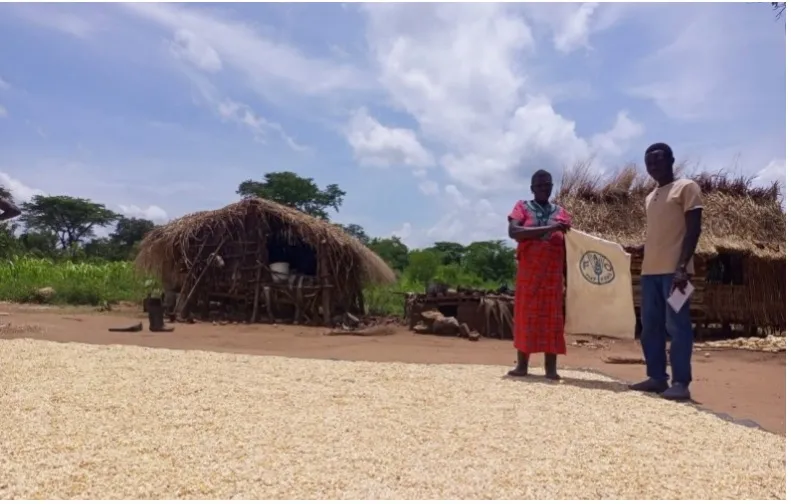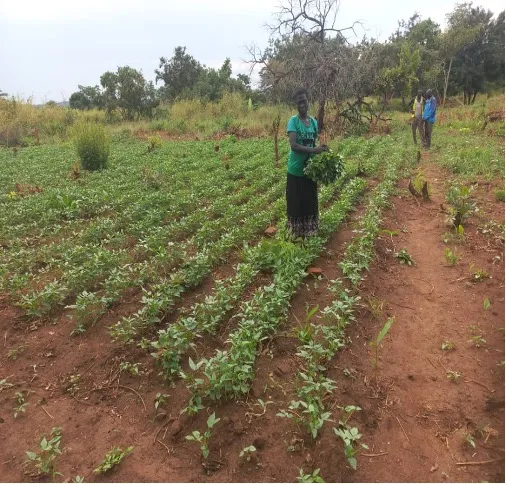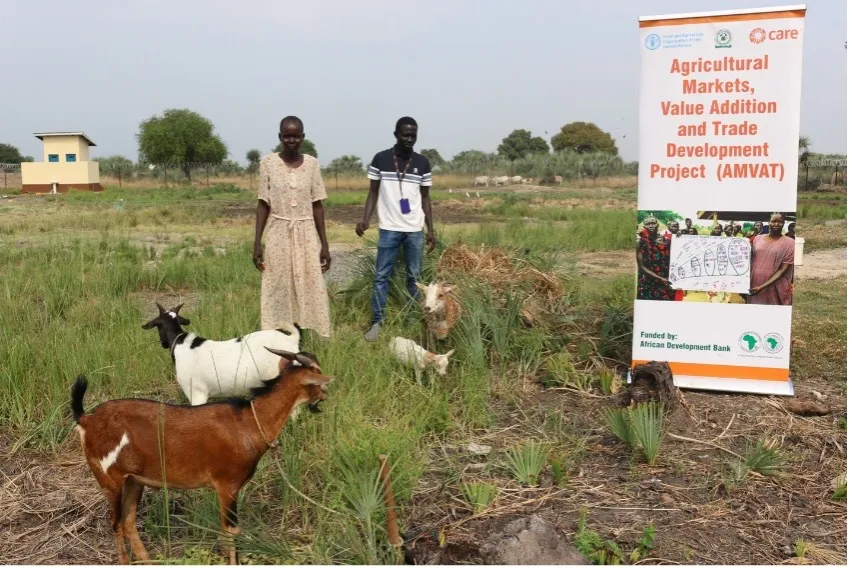
Across the country, fields once left idle due to displacement and insecurity are only slowly returning to life. According to the Food and Agriculture Organization and the World Food Programme, more than 7 million people in South Sudan face acute food insecurity each year.
Women who make up nearly 70% of the agricultural workforce carry the heaviest burden. Despite their central role, they often lack access to land, quality inputs, markets, and financial services, while also facing persistent risks of Gender-Based Violence (GBV) and exclusion from decision-making.
It is within this challenging landscape that a quiet transformation is taking root. Through the Resilient Agricultural Livelihood Project (RALP) and the Agricultural Markets, Value Addition, and Trade Development (AMVAT) project, implemented by CARE South Sudan in partnership with the Food and Agriculture Organization, women farmers in Magwi and Bor South counties, in Eastern Equatoria and Jonglei States, are reclaiming agriculture as a pathway to dignity, stability, and growth.
At 43, Aciro Susan from Pajok Payam in Magwi County in Eastern Equatoria State remembers the uncertainty that once defined her life. Farming on small plots with little knowledge and no access to improved seeds, her harvests barely sustained her family.
“There was a time when no matter how hard I worked in the field, it never felt like enough. I would plant and harvest, but the yield could not sustain my family. I worried constantly about how to feed my children or send them to school.
“Today, I feel a sense of relief and hope. I can see a future where my children are educated, where my farm continues to grow, and where my efforts finally bring meaningful change to our lives,” Aciro narrated.