Seeds of Change: How Women Farmers Are Transforming Communities in South Sudan

By Garang Abraham Malak, Communication Consultant February 27, 2026

In South Sudan, where years of conflict, climate shocks, and economic instability have strained livelihoods, survival has often depended on resilience. For millions of rural households, farming is not just a livelihood, it is a lifeline. Yet for decades, that lifeline has been fragile.

Across the country, fields once left idle due to displacement and insecurity are only slowly returning to life. According to the Food and Agriculture Organization and the World Food Programme, more than 7 million people in South Sudan face acute food insecurity each year.

Women who make up nearly 70% of the agricultural workforce carry the heaviest burden. Despite their central role, they often lack access to land, quality inputs, markets, and financial services, while also facing persistent risks of Gender-Based Violence (GBV) and exclusion from decision-making.

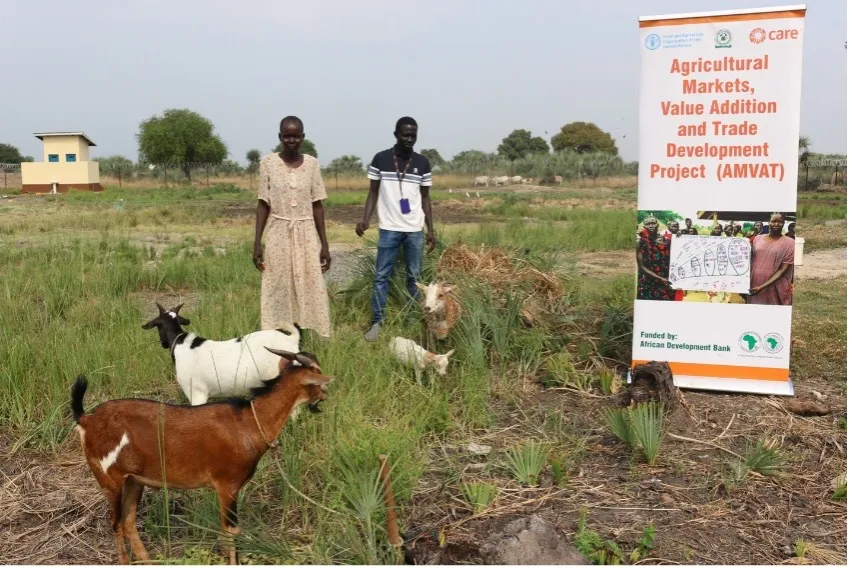
It is within this challenging landscape that a quiet transformation is taking root. Through the Resilient Agricultural Livelihood Project (RALP) and the Agricultural Markets, Value Addition, and Trade Development (AMVAT) project, implemented by CARE South Sudan in partnership with the Food and Agriculture Organization, women farmers in Magwi and Bor South counties, in Eastern Equatoria and Jonglei States, are reclaiming agriculture as a pathway to dignity, stability, and growth.

At 43, Aciro Susan from Pajok Payam in Magwi County in Eastern Equatoria State remembers the uncertainty that once defined her life. Farming on small plots with little knowledge and no access to improved seeds, her harvests barely sustained her family.

“There was a time when no matter how hard I worked in the field, it never felt like enough. I would plant and harvest, but the yield could not sustain my family. I worried constantly about how to feed my children or send them to school.

“Today, I feel a sense of relief and hope. I can see a future where my children are educated, where my farm continues to grow, and where my efforts finally bring meaningful change to our lives,” Aciro narrated.
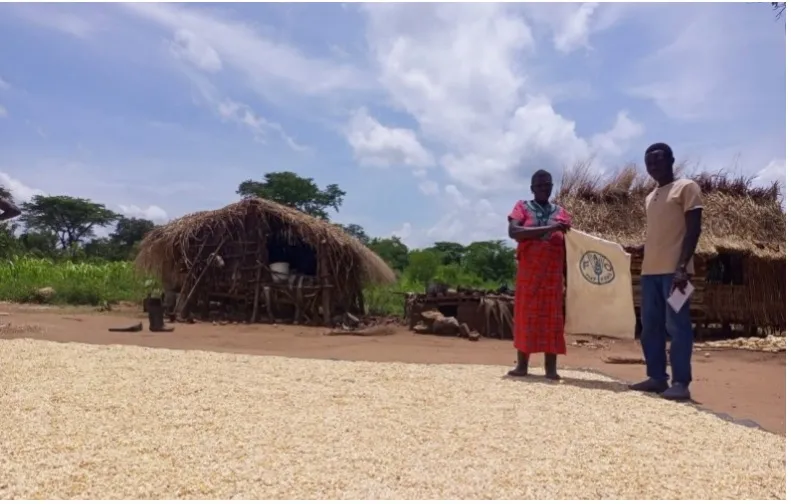
Through RALP, Aciro received trainings in Good Agricultural Practices (GAPs), post-harvest handling, and pest management alongside access to improved seeds and farming tools. What followed was a remarkable shift.

Her maize production surged. Over two seasons, she harvested 3,600 kilograms — enough not only to feed her family but to generate income. With this, she purchased a pair of oxen, expanded her farmland, and invested in her children’s education.

Today, her fields reflect a story of growth, and her confidence now mirrors a deeper transformation, from a subsistence farmer to a respected role model in her community.

In Bor South County of Jonglei State, Nyau Chuei Ghai’s journey echoes a similar resilience shaped by opportunity. Once trapped in low-productivity farming, Nyau struggled with limited knowledge, poor yields, and no access to structured markets.

“Before, I felt stuck. No matter what I did, my harvests were always small, and I did not understand how to improve them or where to sell what little I had. It was discouraging, and sometimes I felt like giving up. But now, I see farming differently. It is no longer just about survival, it is a business, a source of pride, and a way to build a future for my children and even support others around me,” Nyau revealed.

Through the AMVAT project, she gained training in climate-smart agriculture, crop production, and financial literacy. The results were immediate and lasting.

Nyau diversified her production, cultivating sorghum, maize, and groundnuts and began producing surplus for sale. With her earnings, she purchased livestock, supported her children’s education, and even took in and educated an orphan from her extended family.

Her role has since expanded beyond her own farm. As an active member of the Kolnyang Aggregation Business Center (ABC), she now mentors other women farmers, helping them navigate the same journey she once struggled to begin.

“I want other women to understand that farming can change their lives the way it changed mine. When we have the right knowledge and support, we can stand on our own, provide for our families, and become leaders in our communities,” she concluded.

Meanwhile, for 34-year-old Arac Mary in Pogee Boma, Magwi County of Eastern Equatoria State, the transformation is equally profound but rooted in learning and adaptation. Before joining RALP, Mary relied on traditional farming methods that yielded little and often harmed the environment, including bush burning and poor soil management.

“Life was very difficult in those days. We depended on practices we did not fully understand, and our yields were always low. Sometimes we would plant with hope, but harvest with disappointment. There was little food, little income, and very little direction on how to improve,” Marry narrated.

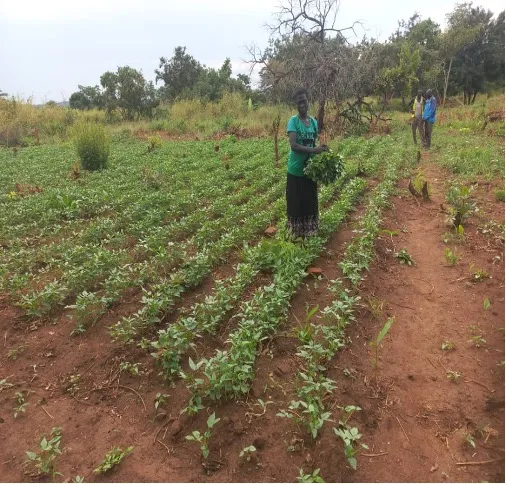
Through targeted training, Mary learned modern and sustainable techniques; nursery bed preparation, proper crop spacing, pest and disease management, and the use of organic methods to maintain soil health.

She applied these lessons directly, cultivating cowpeas and okra across two hectares. In her first season alone, she harvested up to 100 kilograms, earning 300,000 South Sudanese Pounds.

But the most powerful change happened at home. “Today, my family eats three meals a day, something we could not imagine before. I am able to pay school fees, take my children to better health facilities, and plan for our future. This project has not only improved my farming, but it has also restored dignity and stability in my household,” she added.

With improved income, Mary now participates in Village Savings and Loan Associations (VSLA), strengthening her financial independence. Mary has also become a source of knowledge in her community hosting fellow farmers in her garden and sharing practical skills.

“These stories are not isolated successes; they reflect a broader shift. By strengthening farmer groups, improving market access, and promoting environmentally sustainable practices, these projects are addressing both immediate needs and long-term structural challenges.

“What we are witnessing is more than increased production, it is transformation at the household and community level. Women are gaining confidence, financial independence, and recognition. These are critical steps toward reducing poverty, addressing inequality, and minimizing risks such as gender-based violence” said Jade Saidi Musa, CARE South Sudan Senior Food Security and Livelihood Officer.

Despite persistent challenges, poor roads, high transport costs, limited mechanization, and inflation — these women remain resolute. Aciro is expanding her farm and investing in grain milling; Nyau is increasing production and cultivating more land; and Mary aims to farm six hectares while ensuring her children complete their education, their ambitions reflect the transformative power of women-led investments at the very heart of what CARE supports.

With the generous support of our donors, the World Bank and the African Development Bank, these projects show that investing in women farmers is not just a development approach; it is a catalyst for resilience, food security, and lasting change.

Back to Top