Neonatal mortality stands at approximately 40 deaths per 1,000 live births. Behind these figures are women who gave birth without skilled attendance, in homes, on roadsides, or under trees and did not survive.
Across the country, conflict, chronic underfunding, and weak infrastructure have left health systems fragmented and inaccessible. Shortages of skilled health workers, medicines, and emergency obstetric care are not exceptions, they are the norm in rural and conflict-affected areas. For pregnant women in these communities, delivery is not a medical event. It is a gamble.
The challenges are sharpest in border regions, where displacement has compounded an already fragile situation. Communities in Jau Payam, Ruweng Administrative Area, sit three kilometres from Sudan — a frontier that has become one of the region’s most active displacement corridors.
Families arrive on foot, exhausted and sick, having fled bombardment and the collapse of health services across the border. They come with nothing and for years, found almost nothing waiting for them.
Into this gap, CARE International stepped in. Supported by the German Federal Foreign Office (GFFO), the organization operationalized Jau Primary Health Care Centre (PHCC) to provide life-saving primary healthcare to refugees, returnees, and host community members living along this critical border corridor.
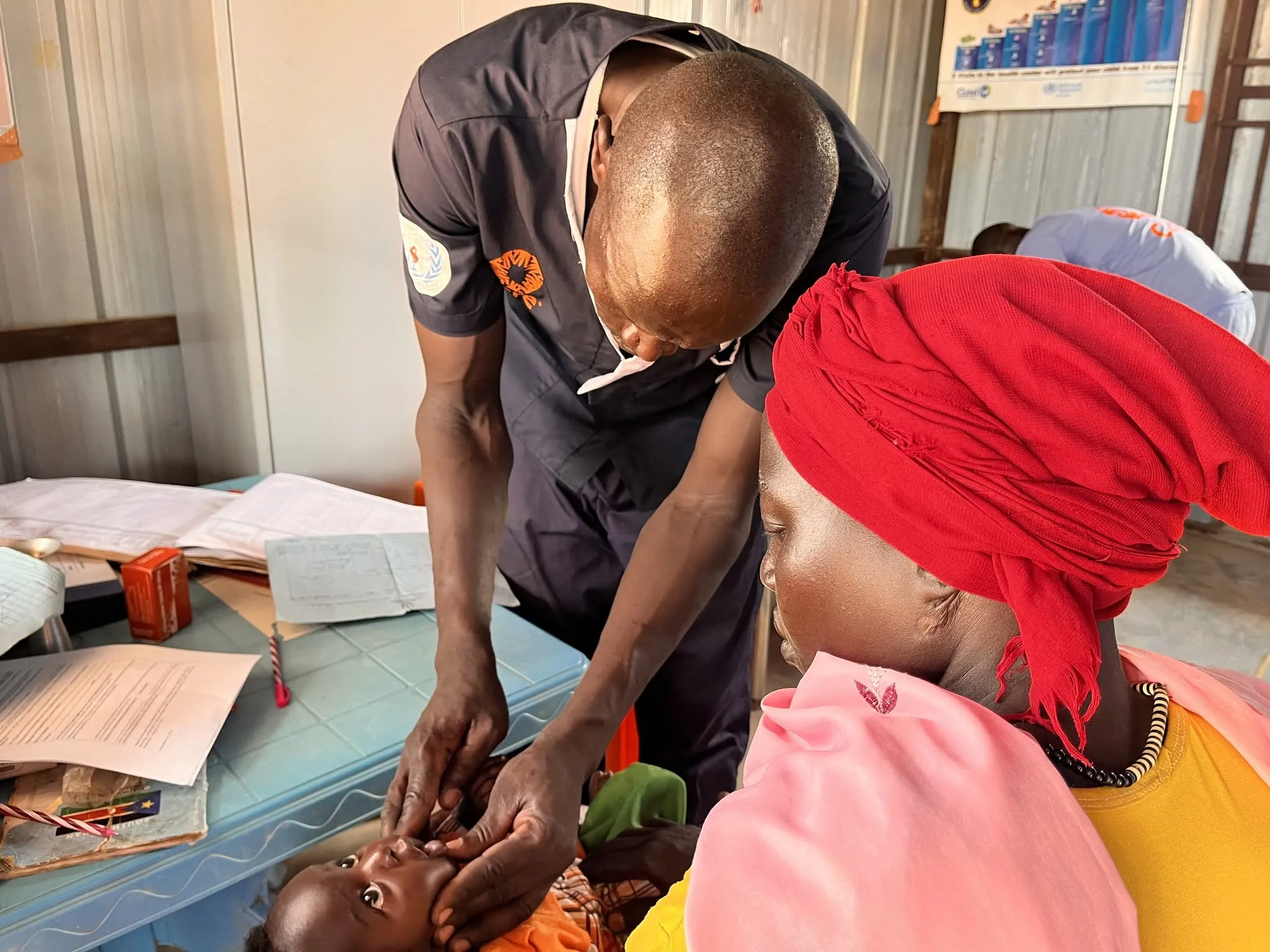
A team of 17 dedicated health workers; clinical officers, nurses, midwives, vaccinators, nutrition assistants, laboratory personnel, and pharmacists now provide care throughout the year, day and night.
The facility delivers antenatal and postnatal care, skilled birth attendance, immunization services, nutrition screening and treatment, laboratory diagnostics, outpatient consultations, and reliable access to essential medicines.
Solar-powered electricity and cold-chain equipment keep vaccines available in one of South Sudan’s most challenging operating environments. Today, Jau PHCC serves a catchment population of more than 70,000 people. In three years, more than 60,000 patients have received treatment through its doors.
For Clinical Officer Peter Akech, who oversees the facility, those numbers represent something beyond outputs. Inside the maternity tent — a small structure where temperatures regularly exceed 38 degrees Celsius, his team works through heat, volume, and pressure, because the alternative is unthinkable.

“There are days when several women arrive in labour at the same time,” he says. “At one point, five women delivered within the same period. The conditions are difficult, but our midwives and nurses continue to provide the best care possible. Every safe delivery reminds us why this facility matters.”
The results speak clearly. Since Jau PHCC became fully operational, not a single maternal or newborn death has been recorded at the facility.
In a country defined by its maternal mortality challenges, that is not an incremental gain; it is extraordinary. It is also the measure that community leader Mohammed Isa returns to above all others.

“Before the health facility came to Jau, people were dying,” he says. “Women delivered without skilled support, and many families had nowhere to turn. Today, things are very different. We have not recorded a single maternal or newborn death. It is not only saving lives, but also giving people hope.”
For a refugee mother who fled the conflict in Sudan with her children and prefers to be called Galatia, the facility has become a lifeline, bridging the gap between survival and collapse.

“The health facility is the reason we can survive here,” she says. “When I had malaria, they treated me. When my children became malnourished, they helped them recover. Last week, I was treated to a typhoid. Without this place, I do not know what would happen to us. I am the only one providing for my children. If I die, they will be alone.”
Women who once feared pregnancy now attend antenatal appointments with confidence. Parents bring children for immunization before illnesses escalate. Families who previously walked for hours in search of care now find services within reach.
Before each daily consultation, health workers conduct community awareness sessions helping families recognize symptoms early and adopt healthier practices. Community confidence, once shattered by years of neglect and conflict, is being rebuilt; one delivery, one consultation, one recovered child at a time.
At one of South Sudan’s most vulnerable border crossings, Jau PHCC stands as proof that with the right investment and the right partners, health systems can reach the last mile and when they do, mothers survive, newborns live, and communities begin to heal.