Every year, the floods arrive and stay, turning footpaths into rivers and homesteads into islands. Each time the water rises, it takes something more: a house, a harvest, the goats, whatever small savings a family had managed to keep aside.
According to the United Nations Office for the Coordination of Humanitarian Affairs (UNOCHA), recurrent flooding has displaced thousands of people across South Sudan, destroyed crops and livestock, disrupted markets, and pushed already struggling communities closer to the edge.
In GPAA, the distance and the terrain make everything harder; getting supplies in, getting the sick out, rebuilding before the next rains come. Older people, persons with disabilities, and women raising children alone feel it most, cut off from markets, from clinics, from any real chance of recovering on their own.
It was into this silence that CARE South Sudan carried a project, made possible by generous funding from CARE USA through the Humanitarian Surge Fund (HSF), under the CI-ERF CIMs contribution.
The project, which began on 1 December 2025 and ended on 31 May 2026, brought timely, life-saving support to flood-affected households across GPAA. Its aim was simple but urgent: to help families meet their most essential needs through cash assistance and safe drinking water, while strengthening community engagement and listening closely enough to learn and prepare better for the floods still to come.
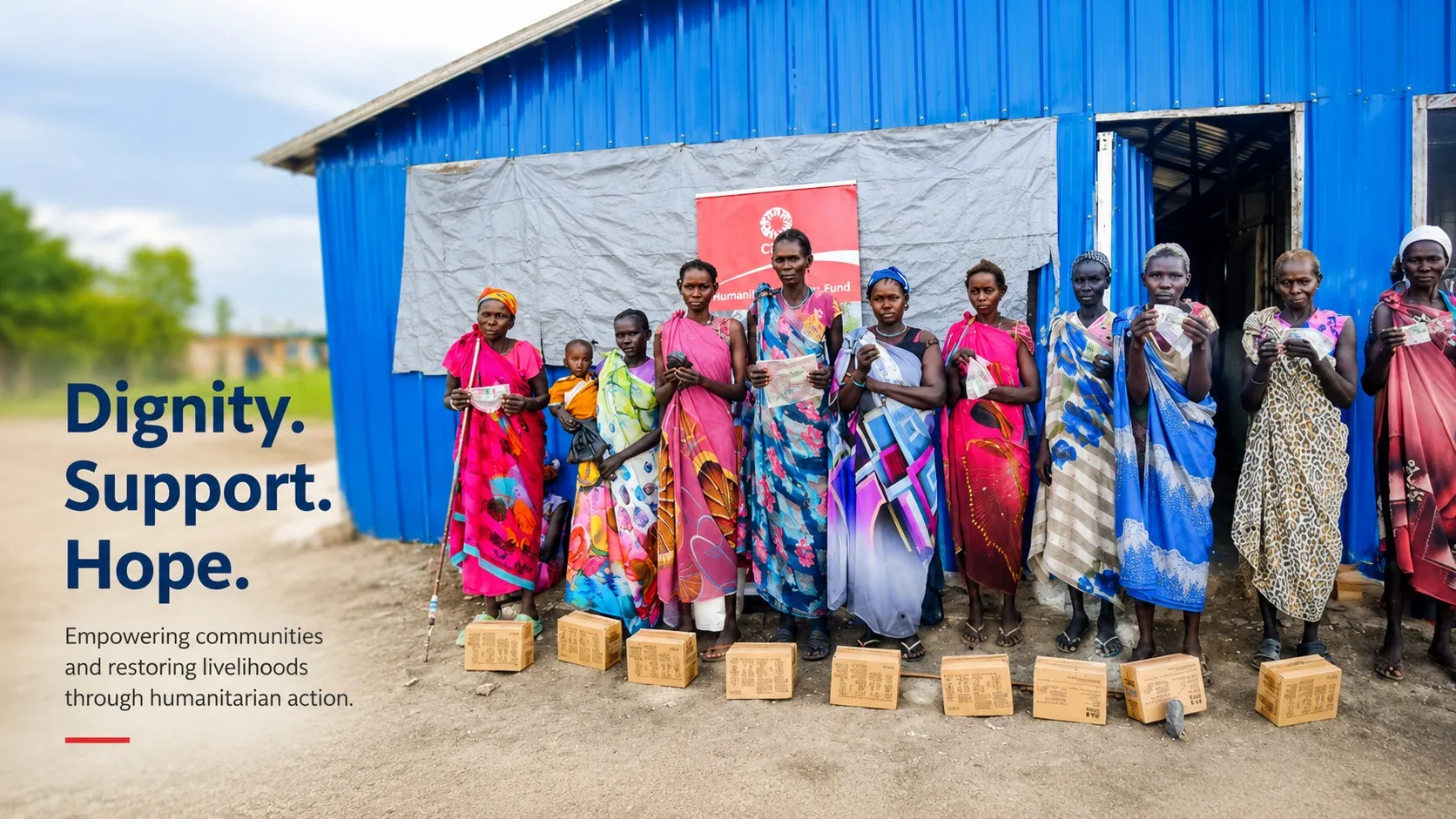
Instead of handing out fixed relief packages, the project gave families in Gumuruk and Verteth Counties something rarer in a place like Pibor: a choice. Food, medicine, a patched-up roof, a small business — whatever mattered most, families decided for themselves. And in that choice was something the floods could not take away: dignity.
Akuda Ariah, 37, lives with a physical disability in Gumuruk. Long before the floods, life had already made things hard for him; few jobs open to him, little way to earn steadily. Each flood swept away what little ground he had gained.

“I often depended on relatives and neighbours for food and other basic needs,” Akuda recalls. “It was difficult because I wanted to provide for myself, but I simply couldn’t.”
When he was selected for cash assistance, he planned every pound carefully; food for his household, treatment for an old ailment, a few essential items for the home, and a small business to build something of his own.
“The cash assistance changed my life,” he says. “For the first time in many months, I was able to decide what my family needed most. I feel respected and independent again.” That small business is still running today, and with it, a version of Akuda that answers to no one but himself.
A short distance away, in a home once swallowed by rising water, lives Mama Rhoda Miroi Aringole, 75. The floods took her shelter, her belongings, and very nearly her hope. “The floods took almost everything,” she narrated. “I didn’t know how I would survive.”
In a place where a single meal can be the day’s hardest problem to solve, Mama Rhoda used her cash assistance the way a grandmother would; sorghum, beans, cooking oil, salt, and enough set aside to patch her roof before the next rains came.

“The cash assistance came at the right time,” she revealed. “I was able to buy food and repair my house. This support gave me hope and reduced the stress I was facing.” For Mama Rhoda, what mattered most wasn’t the money itself, but what it let her do: decide, plan, provide on her own terms, in her own home.
By the project’s completion in May 2026, 500 vulnerable households in Gumuruk and Verteth Counties had received life-saving cash assistance, enabling families to buy food, repair homes, access healthcare, and restart small businesses.